
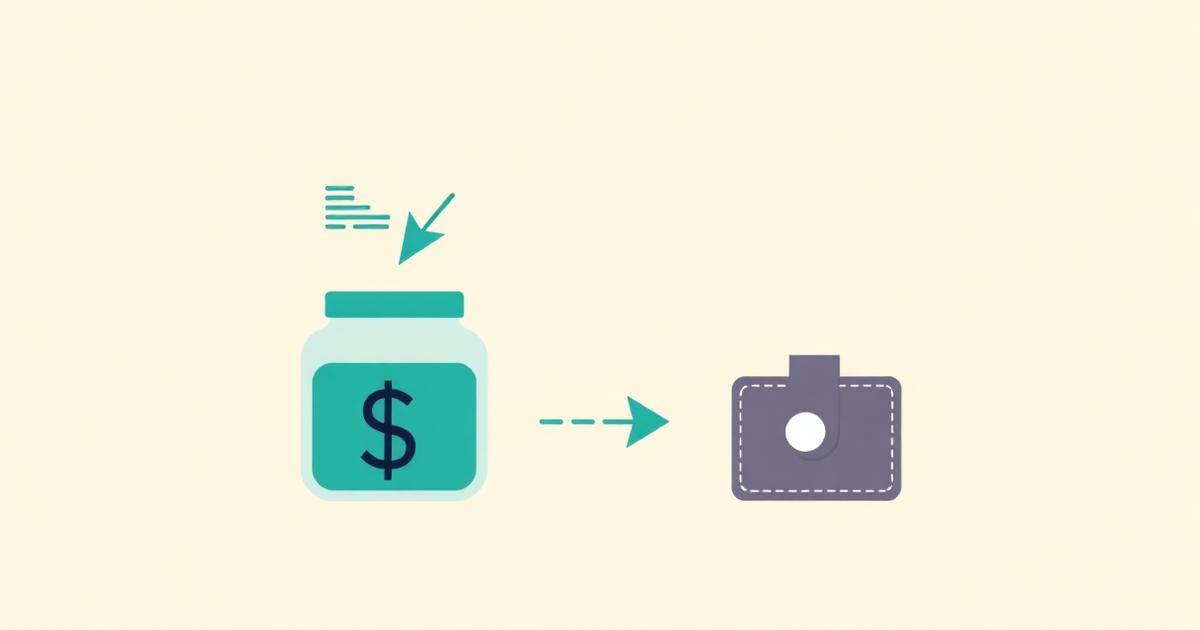
Reverse budgeting is a method where you move money into savings the moment you get paid, then spend whatever is left without tracking it line by line. It flips the traditional order — instead of budgeting every category and hoping savings survive to the end of the month, you take savings off the top first and let the rest be genuinely unbudgeted. It's also called "paying yourself first," and it works because it converts a monthly act of willpower into a one-time setup decision.
That's the whole method. If you've ever abandoned a budgeting app because the categories became a second job, this is the approach most likely to survive contact with your actual life — and the rest of this post is about the parts nobody puts in the summary: who it fails, how much to actually save, and what happens when your spending quietly expands to fill the space.
Want to see where your own money actually goes? Try Spendalyst free for 14 days →
What is reverse budgeting, exactly?
Reverse budgeting is a savings-first system with no expense budget attached. You decide on one number — the amount that goes to savings and investments — automate it, and then treat the remainder as spendable.
A traditional budget works forward: income, minus rent, minus groceries, minus transport, minus subscriptions, minus everything else, and savings is whatever survives. In practice savings rarely survives, because it's the only line with no due date and no consequence for skipping it.
A reverse budget inverts the sequence. Savings becomes the first, non-negotiable transfer. Everything downstream is a single pool. You are not tracking $340 for groceries and $120 for dining out — you're watching one balance and one question: is there money left?
The trade-off is honest and worth stating plainly. You give up granular control over categories, and in exchange you get a system with roughly two moving parts instead of twenty. For most people who have already quit a budgeting app once, that's a good trade. For a few people, it isn't — more on that below.
How does reverse budgeting work, step by step?
The reverse budgeting method works in four steps, and three of them are one-time setup.
That's how to do a reverse budget end to end. The only recurring work is a periodic glance at whether the leftover pool is running out early. If it is, either the transfer is too aggressive or your baseline moved — and both are one-decision fixes rather than a spreadsheet rebuild.
Is reverse budgeting a good idea if you've already quit budgeting apps?
Yes — reverse budgeting is probably the best-fit method for someone who has already abandoned a budgeting system, because it fails gracefully rather than catastrophically.
A zero-based budget breaks the moment you stop entering transactions. Miss four days and the numbers are wrong; miss two weeks and you're doing archaeology. There's no partial credit, which is exactly why so many people quit budgeting apps within the first six weeks.
Reverse budgeting has no such cliff. The automated transfer fires whether or not you opened an app that month. Ignore it entirely for a quarter and you'll still have saved everything you meant to save — you'll just have less insight into where the leftover went. That's a much better failure mode: you lose visibility, not progress.
This is the same logic behind managing money without a formal budget. The goal isn't discipline. It's building something that keeps working on the weeks your discipline doesn't show up.
Reverse budgeting vs. 50/30/20 vs. zero-based budgeting
The three methods differ mainly in how much ongoing attention they demand and what they give you back for it.
| | Reverse budgeting | 50/30/20 | Zero-based (YNAB-style) |
|---|---|---|---|
| Core rule | Save first, spend the rest | 50% needs, 30% wants, 20% savings | Every dollar gets a job before the month starts |
| Categories to maintain | 0 | 3 | 15–40 |
| Ongoing effort | Minutes per month | An hour per month | Several hours per month |
| Best for | People who've quit a budget before | People who want structure without detail | People with a specific debt or savings problem to solve |
| Fails when | Lifestyle creep eats the leftover | The three buckets are too coarse to be actionable | You stop entering transactions |
| Gives you | Guaranteed savings, low visibility | Rough proportions | High visibility, high maintenance |
There's no universally correct answer here. Zero-based budgeting genuinely outperforms if you're digging out of high-interest debt and every dollar matters. 50/30/20 is a reasonable middle. Reverse budgeting wins on survivability — it's the one most likely to still be running in twelve months.
How much should you actually pay yourself first?
Start at 10% of take-home pay if you have no idea, and adjust after two months of real data rather than guessing harder up front.
The common advice for a pay yourself first budget is 20%, and 20% is a fine destination. It's a poor starting point, because setting a transfer you can't sustain produces the same outcome as a budget you can't sustain: you turn it off, feel like you failed, and stop. Better to start at 8% and ratchet up than to start at 20% and quit.
Sequence matters more than the percentage. If you don't have a cash buffer, the first transfer should go there — an emergency fund is what stops an unexpected car repair from becoming credit card debt that undoes a year of saving. Once that's covered, redirect toward retirement and specific goals. Our post on saving for big goals without a budget covers how to run several targets at once without rebuilding a spreadsheet.
One practical note: schedule the transfer for the day after payday, not the same day. Same-day transfers occasionally race the deposit and bounce, which is a demoralising way to start a method that's supposed to be effortless.
Where reverse budgeting quietly breaks down
Reverse budgeting has one real failure mode, and it isn't dramatic — it's lifestyle creep in the unbudgeted pool.
Because the leftover is deliberately untracked, spending expands to fill it without anyone noticing. You end the month at zero, having saved exactly what you planned, and you have no idea that your recurring charges grew by $80 over eight months. The method protected your savings rate and told you nothing else.
The other three failure cases are narrower:
The lifestyle-creep problem is the one worth designing around, because it's the one that affects everybody using the method correctly. The fix isn't to reintroduce categories — that's just rebuilding the budget you escaped. It's to keep a low-effort read on the trend.
What tools do you need for reverse budgeting?
You need two things: an automatic transfer, and some way of noticing when your leftover spending drifts upward.
The transfer is free — every bank does recurring transfers, and that's the whole savings side of the pay yourself first strategy handled. The second part is where most people either overbuild (a full budgeting app they'll quit again) or underbuild (nothing, then a surprise a year later).
This is the gap Spendalyst is built for. It connects through Plaid to Chase, Wells Fargo and 12,000+ other banks, or takes manual entry if you'd rather not link an account. There are no categories to maintain and no monthly budget to set. On eligible Mondays, when enough data is available, it can send a coach card with specific dollar figures for the week, and the spending reports show a six-month trend — which is precisely the signal reverse budgeting is blind to on its own. There's a watchlist of every recurring charge we detect, with price rises flagged, and CSV export if you want the raw numbers. It's $10.99/month with a 14-day free trial and no credit card required.
To be straight about it: you don't need a paid tool for reverse budgeting. The method's whole appeal is that it works with a bank transfer and nothing else. A spreadsheet you update quarterly covers the drift problem adequately. Spendalyst is worth paying for if you know you won't open that spreadsheet — which, if you've quit a budgeting app before, is worth being honest with yourself about.
The short version
Reverse budgeting works because it asks you to make one good decision on one day instead of forty small decisions every month. It guarantees the outcome that matters most — money actually saved — and it deliberately gives up the detail that made your last budgeting app exhausting. Set the transfer, spend the rest, and check the trend every few months. That's it.
Frequently asked questions
What is reverse budgeting in simple terms?
Reverse budgeting means putting money into savings first, as soon as you're paid, and then spending whatever is left without tracking it by category. It's the reverse of a traditional budget, where you plan all your expenses first and save whatever survives to the end of the month.
Is reverse budgeting better than the 50/30/20 rule?
Neither is universally better, but they solve different problems. 50/30/20 gives you rough proportions across needs, wants and savings, and requires you to sort spending into three buckets. Reverse budgeting requires no sorting at all — it only fixes the savings number. If your issue is that you've abandoned every system you've tried, reverse budgeting is more likely to stick because there's nothing to maintain.
How much should I pay myself first with reverse budgeting?
Start at around 10% of take-home pay if you're unsure, then adjust after two months of real spending data. Many people aim for 20% eventually, but starting there before you know your true baseline usually means setting a transfer you can't sustain. If you don't have an emergency fund yet, send the first transfer there before anything else.
Does reverse budgeting work with irregular income?
Yes, with one adjustment: base the automatic transfer on your lowest recent month rather than your average, then move extra money across manually in stronger months. A fixed transfer sized to a good month will overdraw you in a lean one, which is the fastest way to abandon the method.
What's the biggest downside of reverse budgeting?
Lifestyle creep. Because the leftover money is intentionally untracked, day-to-day spending tends to expand to fill it without you noticing — you'll still hit your savings target, but you may not realise your recurring costs have grown. The fix is to check a spending trend every couple of months rather than reintroducing categories.
Ready to see the drift before it costs you? Spendalyst gives you a weekly coach card with real dollar figures — no budget to build, no categories to maintain. Start a 14-day free trial — no credit card required.